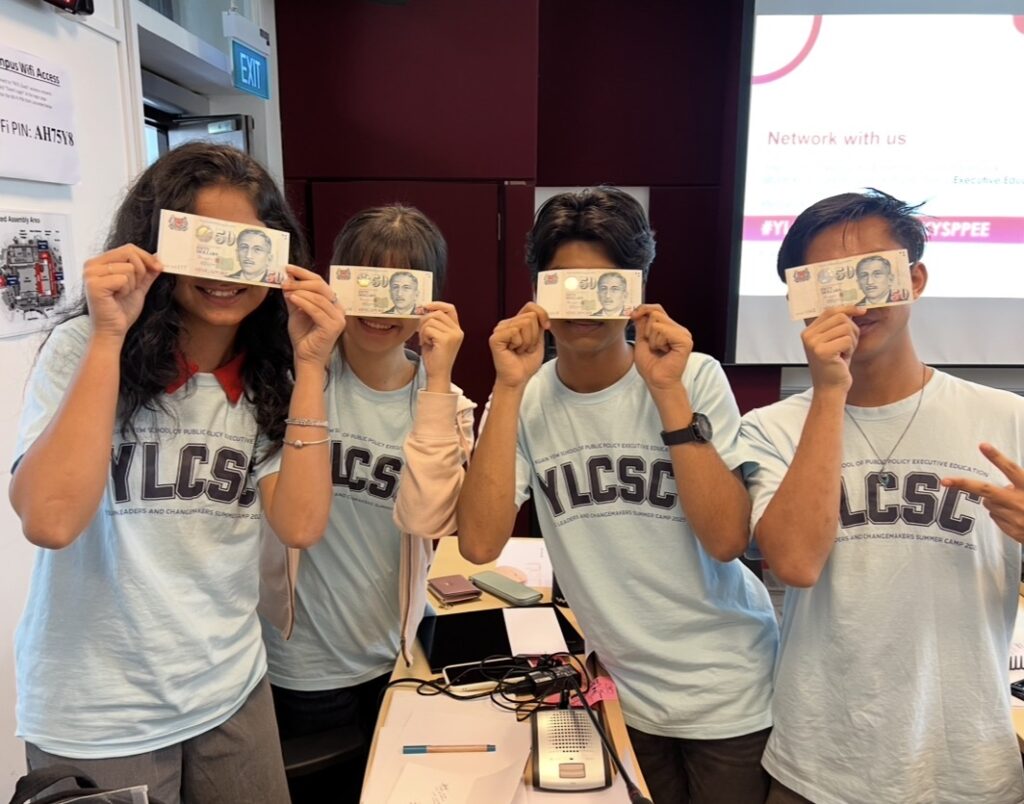
Last year I sat in a room in Singapore for a summer programme at NUS.
We were given a problem to solve: people in Singapore were doom scrolling on their phones during their commutes. How do you make that time more worthwhile?
I remember my first thought — this is a problem that exists because the basics have already been figured out. The trains run on time. The stations are clean. The public spaces are maintained. The fundamental dignity of using a government service has been taken care of. So now the question has moved up a level: how do we make a good thing even better?
Our team designed an app that rewarded people for completing off-screen tasks during their commute — real rewards, things you could actually use. We won first prize.
But what stayed with me wasn’t the prize. It was the contrast.
A few months later I was standing at an Aadhaar update facility in India pressing my fingers onto an uncleaned machine, wondering if the signage would tell me where to go.
Two completely different problems. Two completely different questions being asked.
For a long time I thought of these as two different worlds. But they’re not. They’re the same world at different points in time. Singapore once had its own version of that facility — the missing signage, the unmaintained equipment, the gap between intention and execution. It solved those problems and then moved on to the next question.
Which means the framework it used to get there didn’t disappear. It exists. It travelled once already — from problem to solution.